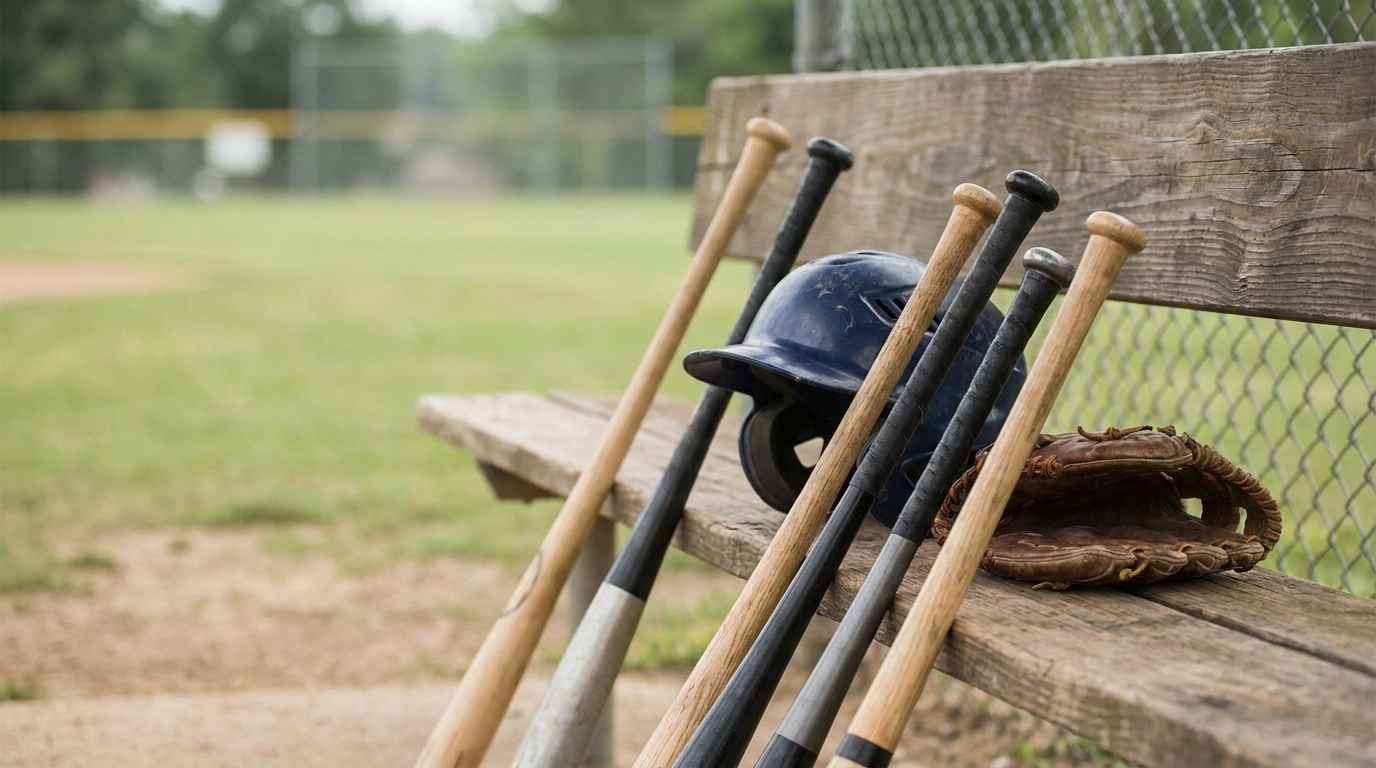
A parent came up to me at the end of an 8U practice last spring, bat in hand, asking if it was the right size for her son. It was a 30-inch, -10 bat — technically listed as “age-appropriate” on every size chart online — but he was 7 years old, 52 inches tall, and 60 pounds. That bat was two inches too long and probably two ounces too heavy. By the end of the season, he had developed a looping, casting swing just to get the barrel to the ball.
The short answer: match the bat to your player’s height and weight, not just their age. A 10-year-old at 65 pounds and 4’4” needs a 28-inch bat; a 10-year-old at 90 pounds and 4’11” can handle a 30-inch. Age gets you in the ballpark — height and weight put you in the right seat.
The Youth Baseball Bat Sizing Chart
Use age as a starting point, then confirm with height and weight:
| Age | Height | Weight | Recommended Length |
|---|---|---|---|
| 5–6 | Under 3’9” | Under 60 lbs | 24–25 in |
| 7–8 | 3’9”–4’2” | 60–80 lbs | 26–27 in |
| 9–10 | 4’3”–4’8” | 70–100 lbs | 27–29 in |
| 11–12 | 4’8”–5’1” | 90–120 lbs | 29–31 in |
| 13–14 | 5’0”–5’7” | 110–140 lbs | 30–32 in |
| 15–16 | 5’7”–6’0” | 140–175 lbs | 31–33 in |
When height and weight point to different lengths, go shorter. Bat speed and control matter more than raw length at every youth level.
Drop Weight — What the Number Actually Means
The “drop” is the difference between the bat’s length in inches and its weight in ounces. A 28-inch bat that weighs 18 ounces is a -10 drop. A 30-inch bat that weighs 20 ounces is also a -10 drop. The bigger the negative number, the lighter the bat relative to its length.
For youth players in Little League (USA Baseball rules), leagues require a -10 or lighter for bats under 33 inches. USSSA leagues typically allow -12 or -13 for younger age groups, which means a lighter bat option is available. A quick reference by age and league:
- Tee ball / 5–7U: -13 drop bats, 24–25 inches (very light, all about making contact)
- 8U–10U rec league: -10 to -12 drop, 26–29 inches
- 11–12U Little League: -10 drop required for USA Baseball-certified bats
- 13U and up: -8 or -5 drops as players move toward BBCOR
If your league uses USA Baseball certification, look for the USA Baseball stamp on the barrel. If it is a USSSA league, look for the 1.15 BPF thumbprint stamp. Buying the wrong certification means your player cannot use the bat in games — we have seen this happen on opening day more than once. For a full breakdown of how the standards differ and which bats qualify where, see our guide on USA vs USSSA bat certifications.
The Test No Size Chart Can Give You
Here is what we actually do in our program when a player gets a new bat: the one-hand extension test. Have your player hold the bat straight out with one arm, parallel to the ground, knob gripped in the palm. If they can hold it steady for five to ten seconds without the barrel dropping, the weight is manageable. If the barrel drops immediately or the arm shakes, the bat is too heavy — regardless of what any chart says.
For length, stand the bat on end beside the player. The knob should land somewhere between mid-palm and just below the hip. If it reaches the waist or higher, it is too long.
These tests matter because kids compensate. A bat that is too heavy causes a hitch in the load, an early front-shoulder fly-out, or a looping swing — all habits that are far harder to unlearn than to prevent. A bat that is too long leads to late contact, pulling off outside pitches, and a wide stance that limits hip rotation. The chart is a filter; these two tests are the final answer before you buy.
The “Grow Into It” Trap
I have coached enough seasons to recognize the growth bat. A parent buys a 30-inch bat for a 9-year-old who needs a 27, reasoning he will grow into it by next year. That math almost never works in the player’s favor. Twelve months of reps with a bat that is too big reshapes a swing in ways that take twice as long to fix.
Buy the correct size for right now. A solid youth bat costs $40–$150. That is a reasonable one-season investment compared to two seasons of mechanics work. If budget is a concern, buy mid-range and the right size — not big to save a season. We break down the best certified bats at every price point in our best youth baseball bats 2026 guide, and a well-constructed $60–$80 USA bat in the correct length will produce better results than a $200 bat one size too large.
Signs Mid-Season That the Bat Is Not Working
Sizing is not just a pre-season decision. Here is what we watch for during the season that tells us something needs to change:
- Front shoulder flying open early — often a length or weight problem, not just a swing flaw
- Barrel dragging through the hitting zone — the bat feels heavy at contact
- Consistently late on pitches the player used to handle — bat speed is eroding under the load
- Swing path growing longer over the season — the player is casting to compensate
When two or three of these show up together, try sizing down before rebuilding mechanics. In our experience, correcting the bat eliminates what looks like a mechanical problem roughly 40 percent of the time.
3-Step Bat Buying Sequence
A Note on USA Bats Feeling Different at the Same Specs
One detail parents notice when they shop: a USA Baseball bat and a USSSA bat listed at the same length and drop weight can feel different at contact. USA bats are built to a wood-like performance profile per their certification standard, which can make them feel slightly denser or stiffer than a USSSA bat at the same specs. If your player is right between two lengths and you are buying for a USA Baseball league, lean slightly shorter to account for that feel difference.
For players transitioning out of 12U rec ball into USSSA travel ball, or approaching the BBCOR standard for high school, bat sizing becomes part of a bigger conversation about physical development. Our youth baseball strength and conditioning program for ages 12–15 covers what strength foundation to build alongside those bat transitions.
The right bat will not make your player a hitter overnight. But the wrong bat will consistently slow down a player who already has the swing. Start with the chart, confirm with the two tests, and buy the size that serves them today — not the size you hope they grow into.