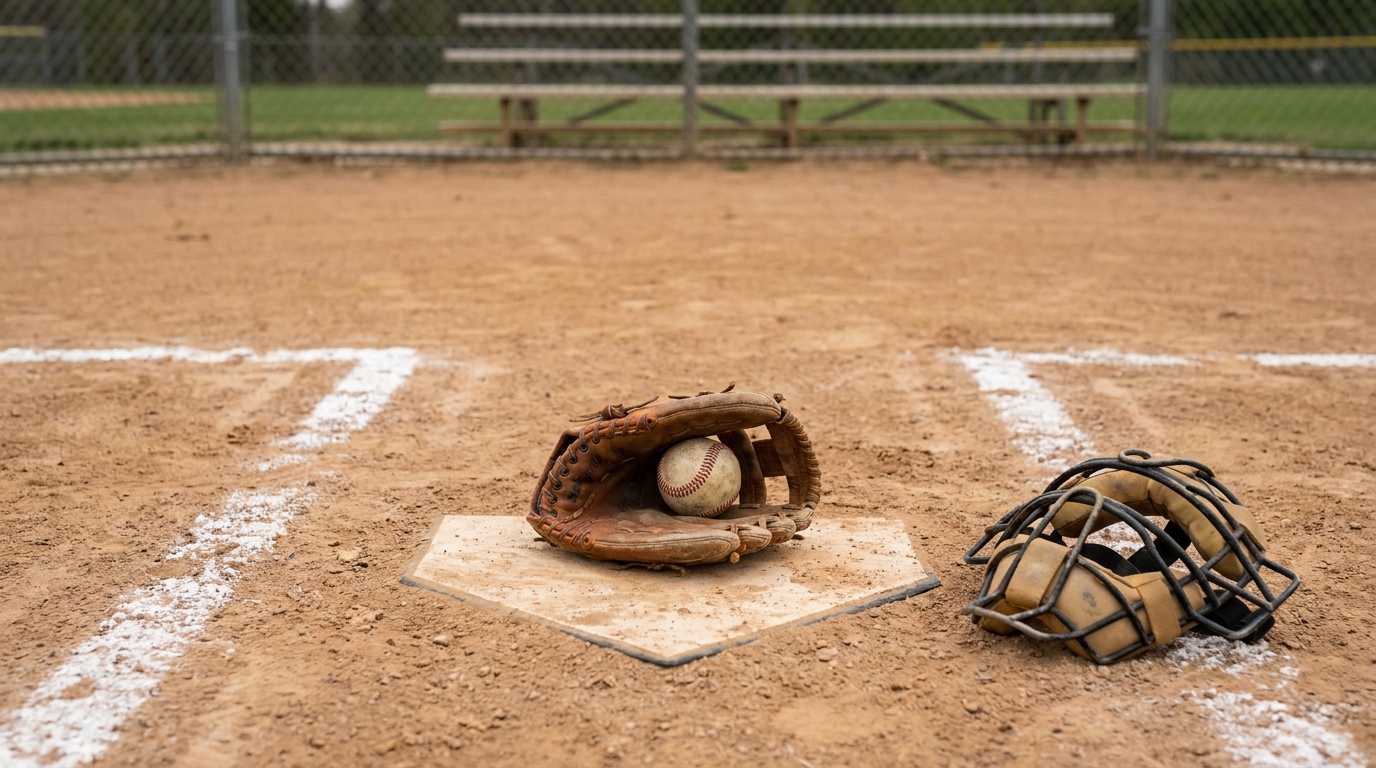
Last spring I had a 10-year-old behind the plate who was doing everything right mechanically — solid setup, soft hands, no flinching on fastballs — but every time a ball hit the dirt, he watched it bounce away instead of dropping in front of it. We were up one run in the fifth and a runner on third scored on a passed ball that should have stayed in front of him. After the inning I asked what he was thinking before the pitch. “I was hoping it would be a strike,” he said.
That was the whole problem. He was reacting. A catcher who reacts to the pitch is always a half-second late on blocks, a step slow on throws, and a half-inning behind in managing the game. Training youth catchers well means teaching them to decide what’s coming before it arrives — not hope for it.
The six drills below are built around that idea. They cover all five skills a youth catcher needs, structured so you can run the complete sequence in 45–50 minutes as a dedicated station at any practice.
What These Drills Actually Build
Before we run a single rep, here are the five skills underneath every catcher drill — named clearly so every rep has a purpose:
- Receiving — catching the ball cleanly in the pocket with a soft, still glove
- Framing — presenting borderline pitches so the umpire sees a strike
- Blocking — getting your body in front of balls in the dirt before they escape
- Pop time — the footwork and exchange that gets the ball to second base fast
- Pre-pitch reads — deciding before the pitch is thrown whether you’re receiving, blocking, or loading for a throw
Almost every catcher drill article covers skills 1–4. Almost none address skill 5 — and that’s exactly where catchers learn to manage a game rather than just play defense behind it.
The Athletic Foundation Comes First
The catcher’s crouch is one of the most physically demanding positions in youth sports. Young catchers who lack hip mobility and knee stability compensate by rocking forward on blocks, drifting sideways on throws, or standing up early on low pitches — and what looks like a technique problem is usually an athletic deficiency. We spend the first five minutes of every catcher session opening the hips and loading the squat before we ever put on a glove.
Recent testing of 2026 youth catcher’s mitt models confirms what we see in practice: catchers who haven’t developed proper hand positioning tend to rely on gear to compensate — choosing deeper pockets or stiffer breaks to catch what they can’t control with their hands. The right mitt matters, but you can’t buy your way out of poor fundamentals. Getting the athletic base right makes every drill faster to learn.
Three Mistakes That Kill Catcher Progress
These are the three issues our drills directly fix:
Pulling the glove back through the ball. Young catchers hear “give with the pitch” and overdo it — the glove moves two inches backward on every catch. The fence drill below eliminates this in one session.
Blocking with the glove instead of the body. When a ball hits the dirt, youth catchers reach for it with their glove. That’s backwards — the chest protector and thigh pads are the blockers, the glove seals the floor between the legs. The blocking progression rewires that reflex.
Throwing from a flat base. Pop time isn’t about arm strength — it’s footwork. A catcher who fires from an open or flat stance will never consistently beat 1.3 seconds regardless of arm strength. Getting the hip pivot right first makes every other throwing element fall into place.
The Six-Drill Block (45–50 Minutes)
Working This Into a Real Practice
Running all six blocks in sequence takes about 50 minutes, which is ideal as a dedicated catchers station while the rest of your team rotates through batting cages or infield work. Our guide to running station-based baseball practice walks through exactly how to structure parallel groups so your catchers get this work without burning practice time everyone else needs.
If you only have 20 minutes: protect the fence receiving drill, the blocking progression, and the live read. Those three fix the most common problems fastest and address all five skills in abbreviated form.
For 10U and under, scale the pop time drill to footwork pattern only — no timing, no emphasis on arm strength, which will develop naturally. Also simplify the live read to just two signals (receiving vs. blocking) before adding the throw-prep option midseason.
The Gear Note
A catcher working on framing and receiving needs a mitt that fits their hand and has the right pocket depth for their level — too deep and they lose feel for the edges; too shallow and firm pitches pop out. Recent 2026 youth catcher’s mitt testing shows properly broken-in medium-pocket models outperform the stiffest pro-style mitts for developmental players at 10U and 12U. If you’re outfitting a catcher for the coming season, you’ll find mitts, helmets, and full gear sets at theranchsports.com — 10% off and no sales tax on baseball gear.
Connecting Catchers to the Rest of Your Defense
The pop time footwork in Drill 5 is really an extension of the same throwing mechanics your whole infield works on. Pairing catcher sessions with your catch play and throwing mechanics drills helps catchers develop their arm as part of a throwing program rather than a separate position-specific add-on — they stay healthier and improve faster. And when you run infield work with your middle infielders, adding a few live reps from the catcher to second while the shortstop and second baseman work is ten minutes that pays off in every close game.
The catcher is the only player on the field who sees every pitch, every inning, from every pitcher. Train them to think like a field general — not just a receiver — and your whole defense gets smarter with them.
Download this as a free PDF — get the free PDF here
Get "Youth Baseball Catcher Drills: 6-Drill Practice Block" as a free PDF
Instant download, plus free coaching resources in your inbox. No spam.
✓ You're in — here's your download
↓ Download the PDFBookmark it for the field — and check your inbox for more free coaching resources.