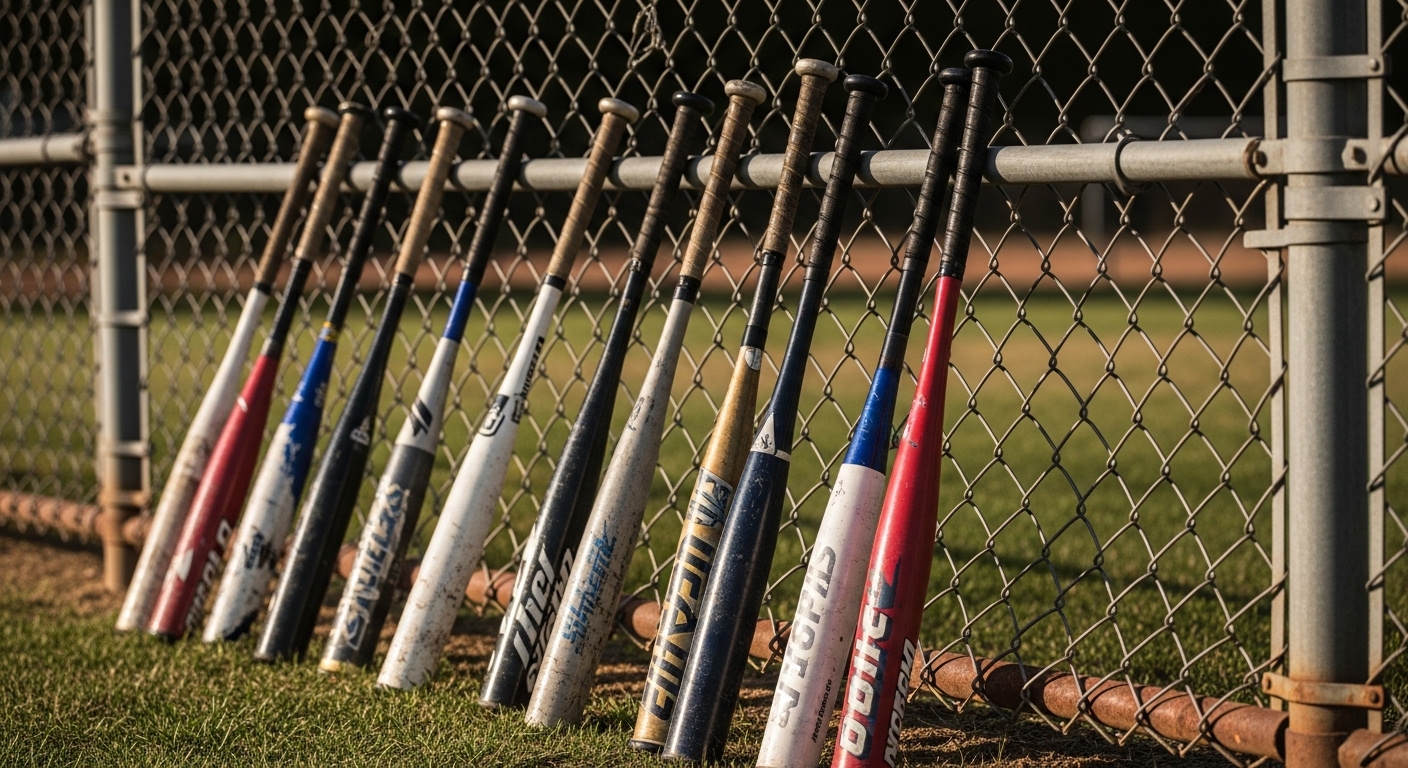
A few weeks into summer ball, a dad found me at the batting cage holding a bat he had just pulled off the pro shop wall. Flared barrel, narrow end cap — like someone moved all the wood toward the handle. “Coach Nick, Marcus wants one of these torpedo bats. Is it even legal?”
That question is landing in our inbox almost daily right now. Here is what every baseball parent needs to know.
A torpedo bat is legal in youth baseball at every level — but whether your kid can game it depends on the certification stamp, not the shape. Buy the wrong stamp for your league and that bat stays in the bag on game day. Whether a torpedo bat is the right choice for your player’s development is a separate question, and we have a clear opinion on that too.
What Makes a Torpedo Bat Different
A standard bat grows wider from the handle all the way to the end of the barrel. A torpedo bat does something different: it peaks in diameter earlier — right where most hitters naturally make contact — then narrows again toward the end cap.
The physics: weight that used to sit in the barrel tip (where contact rarely happens) gets redistributed to the sweet spot. More mass at the contact zone means a wider effective hitting surface where it actually matters. The lighter end cap also reduces swing weight — what physicists call moment of inertia — making the bat easier to swing and control through the zone.
The advantage is not raw power — it is a swing that arrives faster with less effort, and more of the barrel where young hitters actually make contact.
The Question Every Parent Gets Wrong: Is It Legal?
The torpedo barrel profile is legal everywhere — Little League, USSSA, Babe Ruth, high school, all of it. No governing body has banned the shape. What governs game legality is the certification stamp, the same as any other bat.
Here is how it breaks down by league:
- Little League (Tee Ball through Majors, ages 5–12): Requires the USA Baseball stamp — the shield logo on the taper. A USSSA stamp does not satisfy this requirement, even on a torpedo. This is the most common mistake we see families make in rec ball.
- USSSA Travel Ball (13U and under in 2026): Requires the USSSA 1.15 BPF stamp. As of January 1, 2026, USSSA 14U national events moved to BBCOR or wood only — so if your player aged up this year, verify before buying a travel bat.
- High school (NFHS/state association): BBCOR-certified torpedo bats are legal.
- Batting cages and practice: No stamp required, anywhere. Any torpedo bat of any certification is unrestricted for informal use.
Before buying, confirm your league’s stamp requirement. A quick email to your league director takes five minutes and saves you from an expensive bat that rides the bench all season.
Should Your Kid Actually Use One?
This is the question that bat-review channels never answer, and it is the one that matters most for development.
For hitters 12U and under who are still building their mechanics, a wider sweet spot can actually mask the problem you are trying to fix. I had a 10-year-old in our summer program last year who was consistently making contact two inches above the sweet spot on his conventional bat — a mechanics flaw we caught early and started correcting. A torpedo barrel would have absorbed those misses and given him 200 more swings of reinforcing a bad pattern.
You want the miss to register. That honest feedback is how players build barrel feel.
For established players 13 and up with a repeatable, grooved swing, a torpedo bat is a legitimate upgrade, not a gimmick. They have already built the contact zone habits that let them capitalize on the concentrated mass. At that point the bat stops being a crutch and starts being an optimization.
Across our baseball coaching hub we work with athletes from 7U tee-ball through junior high, and our general rule is consistent: dial in the swing on a conventional barrel first, then add the torpedo as the optimization layer on top of solid mechanics.
The Best Use Case: The Practice Tool
The most underrated application for a torpedo bat at the youth level is as a practice-only tool — specifically a wood torpedo used for cage and tee sessions, even if your player games a composite or alloy bat.
Wood bats already force hitters to find the barrel because mishits sting. A wood torpedo deepens that training: the narrowed end cap penalizes rolling over the ball at the tip, and the widened sweet spot rewards players who stay direct to the contact zone. Pair this with structured batting cage station work and contact zone habits build quickly. Wood torpedoes typically run $50–80 and are universally legal for practice use regardless of any stamp — a smart investment for players 12 and up entering off-season development.
Here is the three-session evaluation we run when a player picks up a torpedo bat for the first time:
What to Look for When Buying
Get the stamp right first. Re-read the legality section above and write down your league’s required stamp before you walk into any store.
Drop weight and length are the same math as any bat. A player who needs a 29-inch, -10 drop conventional bat needs the same specs in a torpedo. Our full youth bat guide covers drop weights by age group and how to size correctly — read it alongside the torpedo manufacturer’s recommendations.
Wood torpedo for practice, certified composite or alloy for games. That combination gives you the training benefit and removes any eligibility risk on game day.
Where to shop: You can browse youth baseball bats at theranchsports.com for USA-certified and USSSA torpedo options in youth sizing — plus 10% off and no sales tax through that link.
The Bottom Line
The torpedo bat is real technology. The physics checks out, and for players who have already built a repeatable swing, it is worth a serious look. For younger players still developing their contact zone feel, a conventional barrel will teach them more.
Make sure the mechanics are in place first, then optimize the tool. And while you are gearing up for the season, our step-by-step guide to breaking in a new glove covers the other equipment question we field every spring.