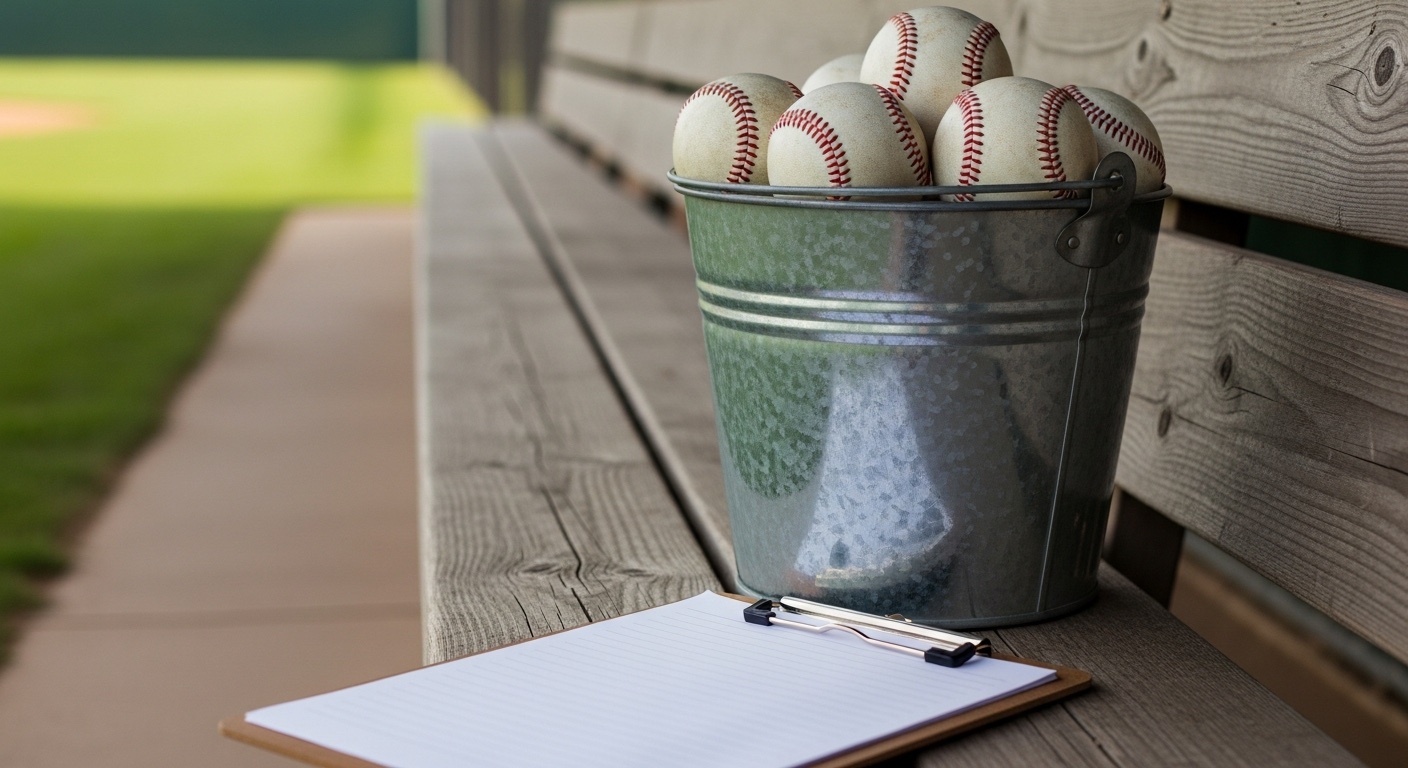
Forty kids showed up to our fall tryout last October. One coach was running grounders down the left-field line, another was running fly balls in right, and nobody had a clipboard. By the time we finished two hours later, we had no scores, no notes, and three coaches with three completely different opinions on the same shortstop. We cut a kid that two of us thought was our best athlete of the day.
That was the last time we ran a tryout without a system.
If you are a head coach or a program director trying to figure out how to run youth baseball tryouts that actually surface the right players, this breakdown is for you. We have run tryouts at the 8U, 10U, 12U, 14U, and 16U levels, and the coaches who get it right share the same habits: they plan the stations in advance, they use objective scoring criteria, and they treat the tryout like a teaching environment — not an audition. If this is your first season in the dugout, our guide for first-time youth baseball coaches is the right companion to this one.
Here is everything we have learned.
Start Before the First Kid Walks Through the Gate
The tryout begins the night before. Print your evaluation sheets. One sheet per player, with their name, age, and a grid covering the five tools you are evaluating: running speed, arm strength, fielding, bat speed, and baseball IQ. If your players are 10 and under, drop bat speed from the primary grid and add “body control” and “coachability” — because at that age, athleticism and coachability predict ceiling far better than current skill.
Assign a coach to each station before tryouts start. Nobody floats. Nobody runs two stations at once. If you only have two coaches, you run a two-station tryout — not four stations with one coach sprinting between them.
We also recommend having one coach whose only job is to watch players when they are not at a station. Some of the most important information you will gather comes from watching a kid waiting in line. Is he fidgeting? Is he watching the drill happening in front of him? Is he talking to his buddies or locked in? That tells you something real about baseball IQ that no drill will capture.
Station 1 — The 60-Yard Dash (or Age-Appropriate Sprint)
For 14U and older, run the 60-yard dash. For 12U and younger, we run a home-to-first sprint instead. The 60 is too long a distance for younger athletes to show you what you need to see, and it puts undue stress on developing hamstrings.
Time every player twice. Throw out the slow run — everybody gets nervous. Record the fast one.
Coaching cue: watch the first three steps, not the finish line. Explosive first-step quickness is what you are identifying. A kid with elite first-step burst and average top-end speed will always outperform a kid with average burst and decent top-end speed on a baseball field.
The Full Tryout Drill Sequence
We run this as a four-station rotation. Each station runs approximately 15–20 minutes. Groups of 8–10 players per station keeps wait time manageable and gives each coach enough reps to form a real opinion.
Evaluating Players Under 12 — Athleticism First
One thing we feel strongly about: for players 10 and under, skill should be secondary to athleticism and coachability. We have made the mistake of cutting an 8-year-old because his swing was underdeveloped, only to watch him show up three years later on an opposing team as a legitimate prospect. At that age, you cannot predict a swing. You can predict an athlete.
Look for kids who move naturally, who recover quickly when they make a mistake, and who pay attention when they are not actively in a drill. Those are your long-term developmental players — and the same raw qualities we build on with our speed and agility drills for young athletes once the roster is set.
This is also the age group where multi-sport athletes tend to stand out. Kids who play soccer, basketball, or football in addition to baseball often show superior lateral agility, body control, and reaction time. Do not discount the kid who tells you he plays three sports. That is an asset, not a red flag.
If you want to make sure your athletes show up to tryouts properly equipped, you can pick up batting helmets at theranchsports.com — 10% discount, no sales tax — so every player has fitted protection before they step in the box.
Scoring and Decision Making
After all four stations are complete, coaches huddle with their scoresheets before any discussion begins. This is non-negotiable. If one coach announces his opinion first, it anchors the entire conversation. Write your scores down, then talk.
We use a weighted scoring system: speed (20%), arm (20%), fielding (30%), hitting (20%), coachability/baseball IQ (10%). Fielding gets the most weight because defense is where young players develop the fastest and where coaching has the most measurable short-term impact.
For borderline players — and there are always borderline players — we give more weight to the intangible column. The kid who hustled every rep, who picked up the catcher’s gear without being asked, who thanked a coach after a correction. That kid will make your team better even if his tools are not yet elite.
We keep our tryout supplies stocked so we have enough balls for every group to go continuously. You can pick up practice baseballs at theranchsports.com — in bulk so you are never short a bucket at a critical station.
After the Tryout — Communicating Decisions
Send cut notifications the same day, by phone or email — never by a group text. If a parent calls, take the call. You owe that kid’s family a real conversation. Be honest about what you saw and what the player can work on. Our best coaching relationships have started with a tough cut conversation that we handled with honesty and respect.
For players who made the roster, send a welcome email the same day with the first practice date, what to bring, and a link to your program’s expectations document. Start strong.
You can find more of our coaching frameworks at our baseball coaching hub, including practice planning templates and player development checklists for every age group.
One Last Thought
The best tryout we ever ran was for a 10U team in our third year of running this system. We finished in 90 minutes, every coach had a scoresheet, and our final roster had zero arguments. One of our assistant coaches — a former Division II outfielder — pulled me aside afterward and said it was the first tryout he had run in eight years where he felt like the process matched the kids he wanted.
That is what a good system does. It does not make the decisions for you. It makes you confident in the decisions you make.
Download this as a free PDF — get the free PDF here
Get "How to Run Youth Baseball Tryouts the Right Way" as a free PDF
Instant download, plus free coaching resources in your inbox. No spam.
✓ You're in — here's your download
↓ Download the PDFBookmark it for the field — and check your inbox for more free coaching resources.