It was the third practice of the season and we had a 7-year-old standing in the batter’s box squeezing the handle so hard his knuckles had gone white. He was waiting for the pitch with his eyes shut. That moment — that specific moment — is where coaching youth baseball for beginners actually starts. Not with the rulebook, not with the lineup card. It starts with identifying what fear looks like on a kid’s face and knowing exactly what to say next.
We told him to open his eyes, take a breath, and watch the ball. He fouled one off into the dirt and grinned like he’d hit a walk-off. That’s the job.
If you’re stepping into your first season as a youth baseball coach, this guide is built for you. We’ve coached at the college level and come back down to the youth game because this is where the foundation gets poured. We’re going to walk you through how to structure your practices, what skills to prioritize, how to communicate with young athletes, and how to build a program that makes kids want to come back next year.
Set the Right Expectations Before Game One
The biggest mistake first-time coaches make is treating youth practice like a miniature version of a college workout. It isn’t. Athletes under 10 have attention windows measured in minutes, not innings. They need movement, variety, and success built into every session.
Before your first practice, make two commitments: every player touches the ball every day, and every player ends practice having done something they’re proud of. Those two rules will carry you through the whole season.
Also understand that for athletes 8 and under especially, baseball is one of several sports they should be exploring. Multi-sport participation at young ages builds coordination, reaction time, and body awareness that transfers directly to the baseball field. Don’t push specialization before middle school — keep it fun, keep it broad.
Gear Up the Right Way
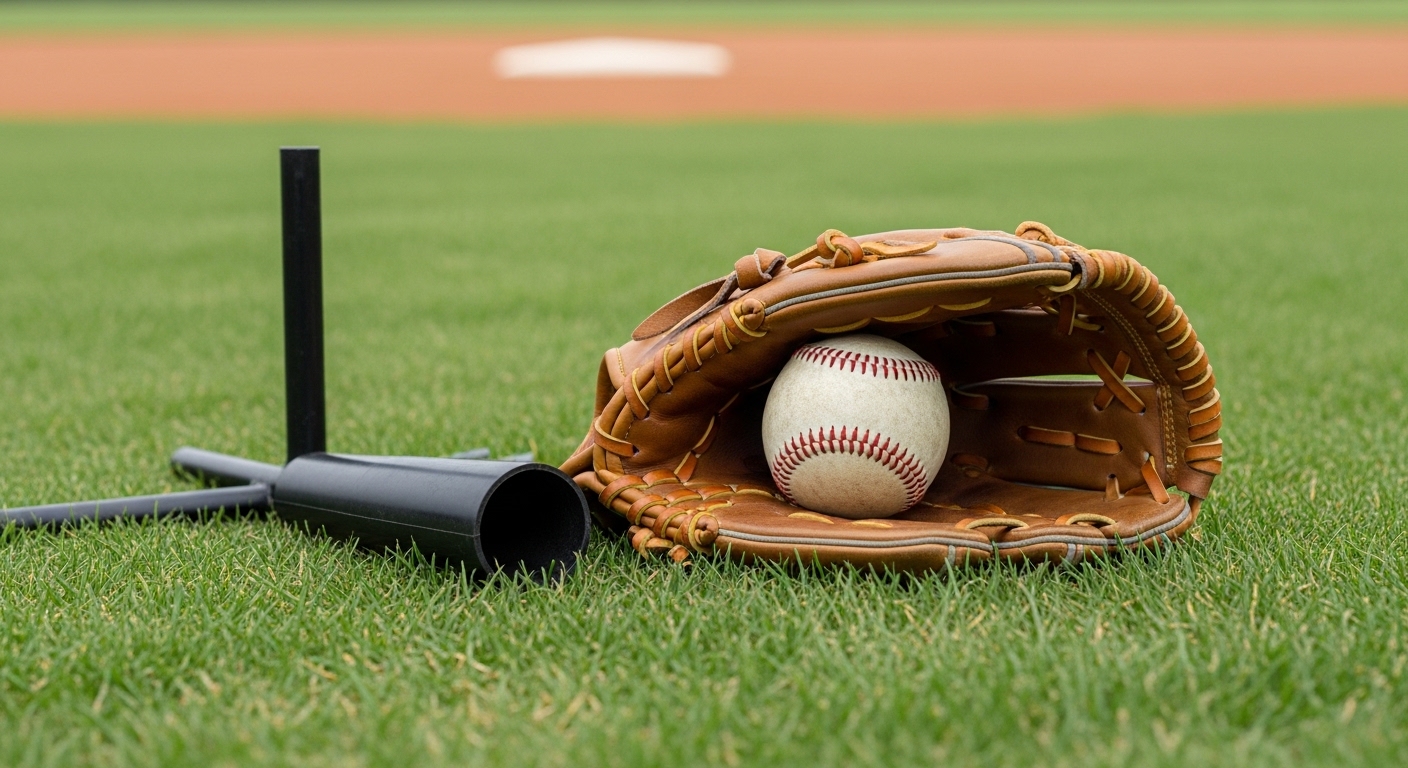
Before you can run a single drill, your players need equipment that actually fits. An oversized glove is one of the most common reasons young players struggle to catch — they can’t close it. Send parents to get youth baseball gloves at theranchsports.com — 10% discount, no sales tax — and steer them toward sizes appropriate for their kid’s hand, not the next size up “so it lasts longer.”
For practice, stock your bag with proper-weight training baseballs. We use a mix of soft-core and standard balls for early reps so players can catch without flinching. You can pick up practice baseballs at theranchsports.com — in bulk so you are never short a bucket at a critical station.
The Four Fundamentals Every Beginner Needs
Across all the years we’ve spent on youth fields, four skills determine whether a young player develops confidence or loses interest by mid-season:
1. Throwing Mechanics — Proper arm path, hip rotation, and follow-through. Get this right early and you prevent arm pain and bad habits.
2. Catching and Glove Work — “Alligator hands” (top hand closes over the glove) and tracking the ball from release.
3. Fielding Ground Balls — Athletic ready position, staying low, fielding through the ball into the throwing motion.
4. Basic Hitting — Balanced stance, knob-to-ball swing path, keeping the head still through contact.
None of these require elite athleticism. They require repetition, good coaching cues, and a patient environment. Our baseball coaching hub has deeper breakdowns on each skill — bookmark it for the rest of the season.
Our Beginner Practice Plan: 90 Minutes That Actually Work
Here’s the practice structure we use for groups of 8–14 players in their first or second season. If you’re coaching the youngest age groups, our full 8U baseball practice plan expands this same structure with age-specific drills and cues. Run it in this order every time. Consistency in structure helps kids feel safe — they know what’s coming and can focus on execution instead of figuring out what’s next.
Communicating With Kids Who Are Struggling
Every roster has two or three players who are significantly behind the others in development. This is normal — youth sport participation rates vary, some kids start at 5, some at 9. Never compare players to each other out loud. Never single out a mistake in front of the group.
Our standard approach: the correction happens one-on-one or in a small group, framed as an adjustment not a failure. “Let’s try this instead” gets better results than “you’re doing that wrong.” We’ve found that players who feel embarrassed shut down and stop trying. Players who feel coached lean in.
For players who are really struggling — especially in catching — use softer balls, reduce distance, and increase their reps during the drill stations. Volume and low-pressure contact builds the confidence muscle the same way it builds the catching muscle.
Building a Season Arc
Your first practice should be almost entirely throwing and catching. Your fifth practice should introduce live hitting situations. By mid-season, players should be rotating through every position in practice, not just the one they’ll “play” in games. The goal isn’t to build a championship team in year one — it’s to build players who understand the game and love showing up.
Track what each player can do at the start of the season, and revisit those benchmarks at the halfway point. Even small improvements — throwing accurately from 30 feet instead of 20, making contact off a tee 4 out of 5 swings — are worth celebrating with the player and their parents.
Parents are part of the program. Send a brief note after the first practice letting them know what you’re working on and why — our parent communication letter template gives you a ready-to-send starting point. Parents who understand your approach become your biggest allies instead of your loudest critics.
The Bigger Picture: What Youth Coaches Are Actually Building
Every coach we respect — from youth rec leagues to Division I programs — says the same thing when they look back: the players they remember aren’t the ones who hit the furthest. They’re the ones who came back every year because they loved the game.
You are the first impression the sport makes on these kids. That’s the job. Not the scoreboard, not the standings. If they leave your season wanting to play next year, you coached a great season.
Start simple. Build fundamentals. Build confidence first. Everything else follows.
Download this as a free PDF — get the free PDF here
Get "How to Coach Youth Baseball: Complete Beginner Guide" as a free PDF
Instant download, plus free coaching resources in your inbox. No spam.
✓ You're in — here's your download
↓ Download the PDFBookmark it for the field — and check your inbox for more free coaching resources.