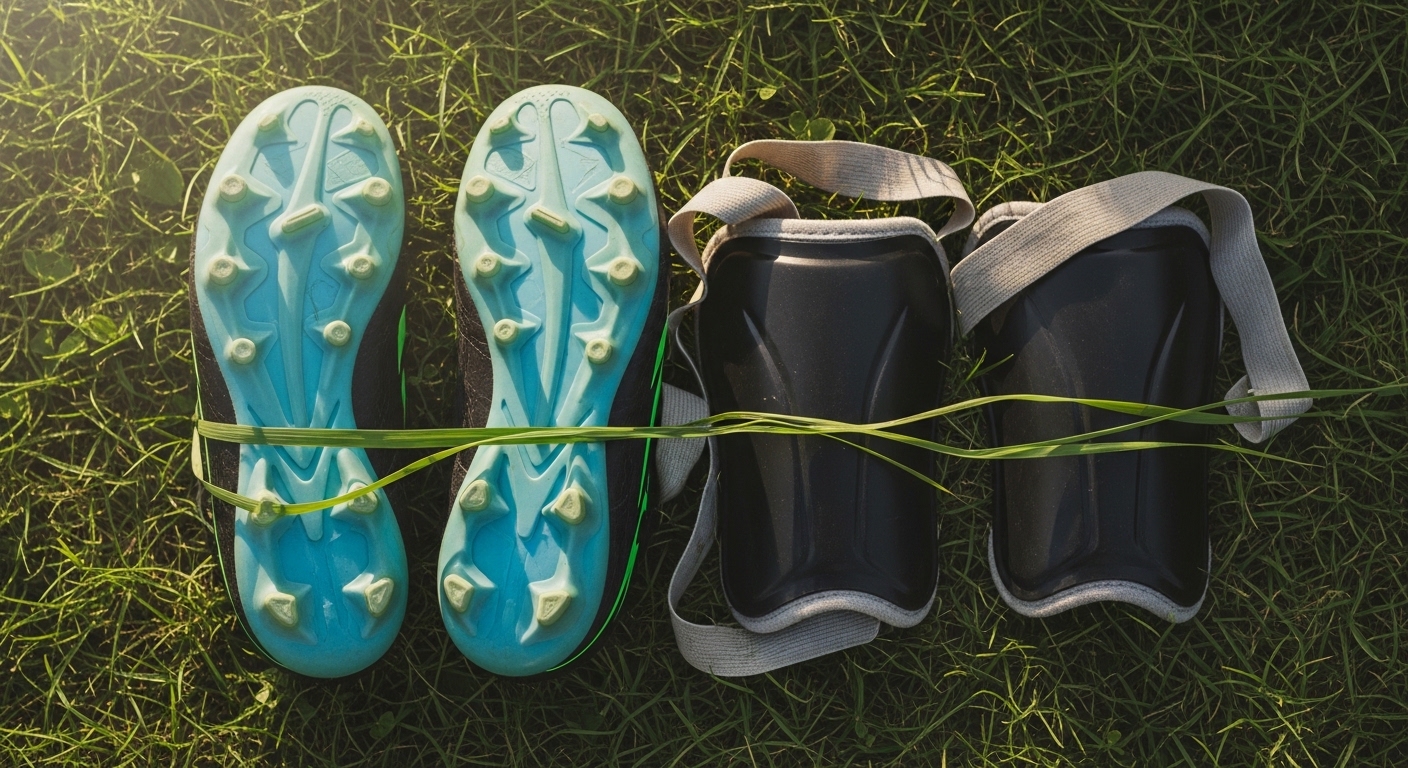
Two weeks into this summer’s season, a mom showed up to our practice holding a box with a $250 elite speed boot inside — the exact pair her 9-year-old had watched his favorite winger wear in a World Cup group-stage match the night before. The kid was thrilled. The boot was a half size too big “so he can grow into it,” paper-thin underfoot, and built for a professional who weighs 170 pounds and changes direction at full sprint. By the end of the first water break he had a hot spot on his heel, and by the end of practice he was asking to put his old pair back on.
With the 2026 World Cup playing out across North America, we are going to see a lot of this. Kids want the boots the pros wear, and the marketing is engineered to make that feel urgent. Here is what our coaching staff actually tells families.
Updated for the 2026 fall season with current cleat lines and pricing.
For 95% of youth players, buy a firm-ground (FG) cleat with molded plastic studs, fitted with about a thumb-width of room at the toe, in the $30–80 range. Skip metal studs entirely — most youth leagues prohibit them anyway — and never size up a full size to get an extra season out of the shoe. A $45 cleat that fits beats a $250 replica that doesn’t, every single time.
Match the Cleat to the Surface, Not the Highlight Reel
Cleat companies sell a dozen sole configurations. Youth families need to know three.
Firm ground (FG) is the default. Molded plastic studs — usually a mix of conical and bladed shapes — designed for natural grass that’s neither bone-dry nor soaked. This is the right call for almost every outdoor youth practice and game in the country. If you buy one pair, buy this.
Turf shoes (TF) have dozens of short rubber nubs instead of studs. If your club trains primarily on artificial turf — increasingly common, especially in the Southwest and at indoor-adjacent facilities — turf shoes grip better and are noticeably easier on young knees and ankles than full studs on a hard carpet. Many of our players who train on turf twice a week keep a TF pair in the bag alongside their FG pair.
Indoor flats (IC) are flat-soled, gum-rubber shoes for futsal courts and gym floors. They are their own category; studs of any kind on a gym floor are a turned ankle waiting to happen.
What about metal studs (SG, soft ground)? Skip them. Most youth leagues ban metal entirely, referees check at equipment inspection, and a kid in metal studs gets sent back to the parking lot to change. If you think your league might be an exception, check the rules in writing before you buy — but we have almost never seen a youth player who needed them.
The Sizing Rule That Actually Matters
Here is the rule, and it is worth more than every brand comparison on the internet: the player should have about a thumb-width of space between their longest toe and the end of the boot. No more, no less.
Sizing up a full size “to grow into” is the single most common cleat mistake we see, and it causes two real problems. First, blisters — the foot slides inside the boot on every cut and stop, and friction does the rest. Second, and the one parents don’t expect: bad touch. A soccer cleat is an instrument for feeling the ball, and when there’s an inch of empty boot past the toes, the player is receiving and striking with dead space. We’ve watched a player’s first touch visibly improve the same day they switched into a properly fitted boot.
One of our coaches spent years on a Division II college soccer staff, and his fitting routine is the one we now use with every family who asks. Have the kid put both cleats on with their actual game socks. Lace them fully. Press your thumb across the toe box — you want your thumb-width and nothing more. Then have them jog ten yards, plant hard, and cut. If the heel lifts or the foot slides forward, it’s wrong. That check takes ninety seconds in a store and saves a season of blister tape.
Yes, kids’ feet grow fast. The answer is buying the right size more often, not the wrong size once. Budget accordingly — more on that below.
Fit Beats Brand, Every Time
Nike, adidas, Puma, New Balance — they all make good youth cleats, and they all make boots that will be wrong for your specific kid’s foot. The honest version of brand advice is about foot shape, not logos. Wider feet tend to do well in lines like the adidas Copa and Nike Tiempo, built on roomier uppers. Narrower, lower-volume feet often fit better in speed-style lines like the Nike Mercurial or adidas X. That’s a starting point for which wall of the store to try first, not a verdict.
What we see on our fields is that the kids playing the best soccer are almost never the ones in the most expensive boots. The cleat’s job is to disappear — no rubbing, no sliding, no thinking about it. And keep gear in perspective: cleats matter far less than how a young player moves. The work in our guide to speed and agility for young athletes will do more for a kid’s first step than any sole plate ever will.
When to Replace Them
Watch for three signals, in order of urgency:
- Toes touching the end. The thumb-width is gone. Replace now — this is a growth issue, not a wear issue, and waiting means blisters and bruised toenails.
- Stud wear. Molded studs round off and shorten on hard ground and parking-lot walks. When studs are visibly rounded or the player starts slipping on routine cuts, traction is gone.
- Upper separation or seam blowout. Common at the big toe flex point. A little glue buys a few weeks; a flapping toe box means replacement.
For most kids playing one season per year, one pair per season is normal. Year-round players in growth spurts may need two. That’s not a defect — that’s a child’s foot doing its job.
What $30–40 Buys vs. $60–80 — and Why That’s Enough
Realistic price tiers for youth cleats in 2026:
- $30–45: Entry youth lines from the major brands. Synthetic uppers, perfectly functional molded FG soles. For ages 6–10 and for any first or second season, this tier is genuinely all a player needs — which matters for athletes in the 6–10 development window, where confidence and reps matter infinitely more than equipment.
- $60–80: Mid-tier versions of the flagship lines. Better upper materials, more comfortable fit out of the box, a touch more durability. Worth it for kids playing year-round or in club ball.
- $150–250+: The pro-replica tier the World Cup ads are selling. Built for elite adult athletes — thin, aggressive, and not more durable. For a child who will outgrow them in months, this is the wrong buy at almost any age.
Kids outgrow cleats in a season. Spend like it. Every line we mentioned above is carried by the big sporting-goods retailers — buy on fit and surface, not on brand or banner.
Our 2026 Picks, by Player Type
Rather than fake a lab test (“we tested 40 cleats” — no, we coached a few hundred kids), here are the archetypes we recommend by use case. Each maps to multiple good options from the major brands.
The rec-league workhorse ($30–50). A durable synthetic FG cleat from a major brand’s entry youth line. Survives a full season of practices, games, and being thrown in the trunk. The right buy for most 6–11-year-olds, period.
The lightweight option for the kid who complains about heavy shoes ($45–70). Some kids are genuinely bothered by boot weight and stiffness. A speed-line youth model (Mercurial- or X-style) in a snug fit solves the complaint — just be extra honest about width, because these run narrow.
The wide-foot comfort boot ($50–80). Tiempo- and Copa-style boots with soft, roomy uppers. If your kid constantly kicks off their shoes at home or complains about pinching, start here. Often the best touch-feel per dollar in youth sizes.
The turf-trainer second pair ($35–55). A TF shoe for clubs that practice on artificial turf. Easier on joints, better grip on carpet, and it extends the life of the FG pair. Also a great everyday option for kids who play multiple sports — and there are real development reasons to be one of those kids, as we covered in why multi-sport athletes are better players; rotating footwear across sports and surfaces is part of that same load-management picture.
The serious club-player upgrade ($70–90). For the 11–13-year-old playing year-round who has stopped growing a size every six months, a mid-tier flagship boot is a reasonable reward. Still not the $250 replica.
The Coaching Bottom Line
Firm-ground molded studs, thumb-width of room, $30–80 depending on how much your kid plays, replaced the moment toes hit the end. That’s the whole formula. When your 9-year-old begs for the boots their World Cup hero wears, the move isn’t a $250 boot — it’s the $50 boot in the same colorway and a few extra touches on the ball in the backyard.
For more on how we develop young soccer players — practice plans, first-touch work, and age-by-age coaching guides — visit our soccer coaching hub.