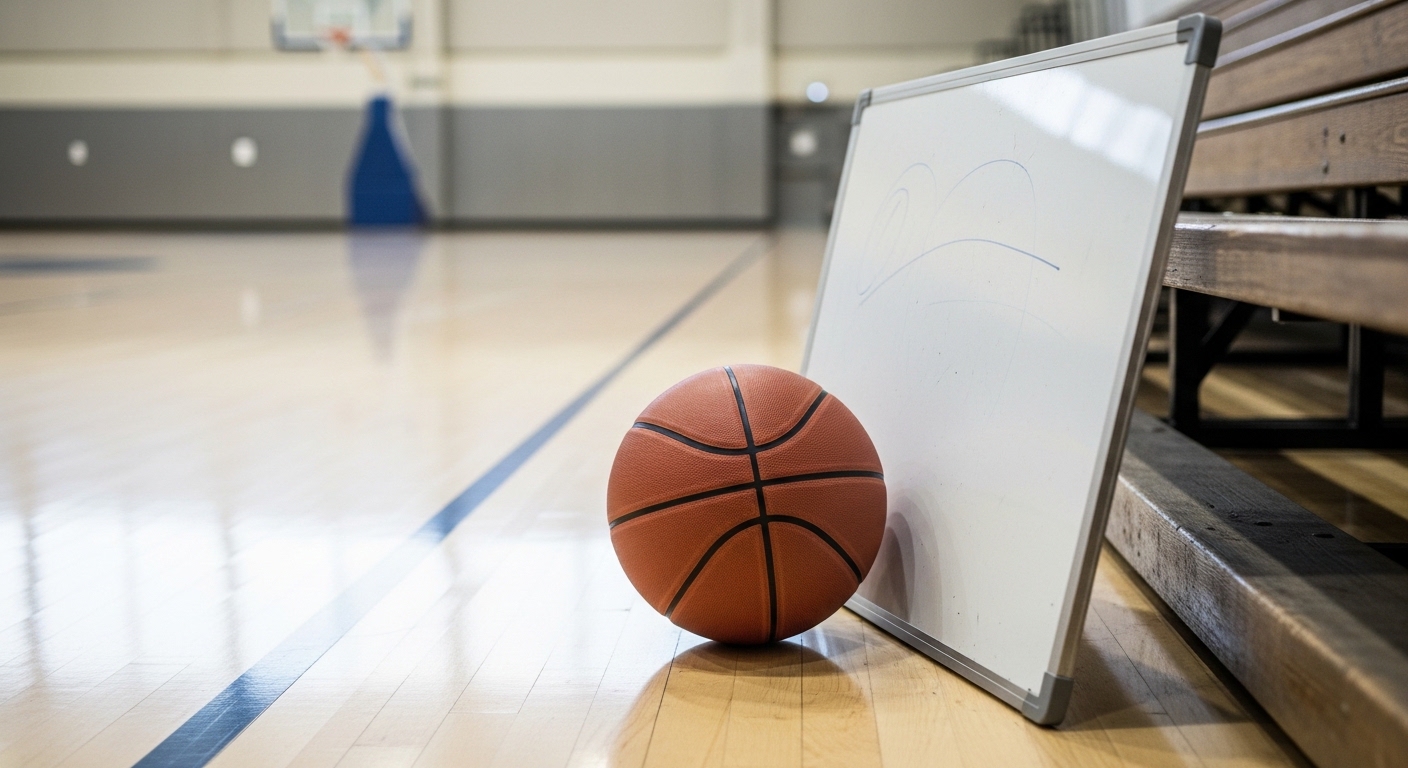
The first thing I noticed walking into the rec center gym for our 8U basketball season was a kid dribbling with both hands, one parent already hovering near the baseline, and six other players who had clearly never touched a basketball in their lives. We had 45 minutes, zero assistant coaches, and a tournament two weeks away. That’s how first-time youth basketball coaching usually starts.
If you’re coaching youth basketball for the first time, here’s the short answer: Focus on three skills — dribbling, passing, and shooting form — and one principle: make practice feel more like recess than school. You don’t need plays, set offenses, or zone defense. Run a brief parent meeting before your first session, keep your drills moving, and remember that your job in year one is to build a love for the game.
The rest of this guide covers exactly how to do that.
Know Your League Rules Before Day One
Youth basketball leagues modify rules constantly, and the variation is bigger than most first-time coaches expect. Before your first practice, download and read your league’s rulebook. The things that trip up new coaches most:
- Ball size: 27.5” for 8U and under; 28.5” for ages 9–12; full 29.5” for 13+. Using the wrong size makes dribbling harder than it needs to be and slows skill development.
- Pressing restrictions: Many rec leagues prohibit full-court press until U10 or U12. Check before you game-plan your defense.
- Substitution rules: Some leagues require mandatory equal playing time. Know what rotation you’re expected to run before your first game.
- Clock rules: Youth leagues often use a continuous clock that doesn’t stop for fouls. It changes pace management entirely.
Attend your league’s preseason coaches meeting if there is one. You’ll get rule clarifications, meet the other coaches, and avoid the moment at tip-off where you discover something important you didn’t know existed.
The Parent Meeting You Can’t Skip
Before or immediately after your first practice, gather parents for five minutes. Cover three things:
- Your coaching philosophy — development over winning, everyone plays, effort and attitude come before everything else
- Sideline behavior — cheer, don’t coach from the stands; one voice on the court is yours
- How and when to reach you — text, email, or after practice, not during
This one meeting prevents the majority of sideline issues first-time coaches face. If things have already gotten complicated with a parent, we’ve written a full practical guide to handling difficult parents in youth sports.
What to Actually Teach: The Honest Skill Ladder
Most first-time coaches arrive with a clipboard of plays. Skip it for now. Here’s the progression that actually builds a team:
Weeks 1–2: Ball comfort. The biggest barrier for beginners isn’t not knowing the rules — it’s being uncomfortable holding a basketball. Run 10–12 minutes of ball-handling every single practice starting day one.
Weeks 3–4: Passing. Chest pass, bounce pass, and reading a teammate. Start 2v0 before adding any defender. Players need to feel what a clean pass looks like before you put them under pressure.
Weeks 5–6: Form shooting. The BEEF system — Balance, Eyes, Elbow, Follow-through — works at every age. Players who learn one-hand wall shooting early — starting close, 3–4 feet from a wall with no rim pressure — build muscle memory that holds up under game conditions. Start close. Distance comes later.
Ongoing: Small-sided games. As soon as players can dribble without watching the ball, introduce 3v3. Every player touches the ball more, every player defends, and you can stop play to coach decisions in real time. It’s the single best teaching tool in youth basketball.
Handling the Mixed-Experience Team
Here’s the gap that most first-time coaching guides skip entirely, and the thing most likely to derail a season: your team has players at wildly different experience levels, and the same drill doesn’t work the same way for all of them.
A typical rec team of 8–10 kids usually breaks into three groups:
- One or two who’ve played before and will mentally check out during beginner drills
- Five or six true beginners who need slow, successful reps to build confidence
- One or two athletic kids who’ve never played organized basketball but pick things up fast
The fix isn’t different practices — it’s different constraints on the same drill. When you run ball-handling, give your experienced players a time challenge or add a light defender while beginners work uncontested. Pair your athletic newcomers with experienced players in passing drills — they accelerate each other.
This isn’t tracking or cutting anyone. It’s making sure the kid who’s played for two years is challenged, and the kid who just picked up a basketball isn’t humiliated.
Teaching Rules Through Play
Most coaching guides tell you to teach the rules. What they miss is how to teach them to a group of 8-year-olds without turning practice into a classroom.
What actually works:
- Play first, flag after. Run 3v3, then pause when a violation happens and explain it live. “That’s traveling — two steps without dribbling. Watch, here’s the right version.” One real-time example beats ten minutes of whiteboard explanation.
- Name violations when they happen. Introduce fouls and violations as they occur, not as a pre-practice lecture. By week four, players know the rules because they’ve lived them.
- Keep a cheat sheet. You will absolutely blank on a rule during your first game. Write the key ones on an index card and keep it in your pocket. No shame in it.
Practice Structure That Works
Here’s the 60-minute template we use for beginner and intermediate teams:
For the full session breakdown, our 90-minute beginner basketball practice plan gives you a drill-by-drill script you can run as-is. For more age-specific programming, visit our basketball coaching hub.
Athletic Foundation: The Long Game
We push this principle across all our programs: youth basketball is an excellent opportunity to build athletes, not just basketball players. Kids under 12 who develop lateral quickness, coordination, and multi-directional movement become better basketball players — and better athletes in every sport they play.
Agility ladder progressions fit naturally into a warm-up block before ball-handling work — 5–6 minutes of ladder drills pays off in faster footwork and better body control on defense. Lateral shuffles, T-drills, and single-leg balance work all transfer directly to on-court performance. The kids who build this foundation at 8–10 show up at 13–14 with a real physical edge over players who only ever drilled basketball skills.
Your First Game
The first game feels like organized chaos. Keep it simple:
- Sub early and often. Every player needs to compete. If your league allows it, rotate every two minutes.
- Write your rotation down before tip-off. Don’t try to manage substitutions from memory in the middle of a live game.
- Coach one or two things, not fifteen. Stay between your player and the basket on defense. Find the open teammate on offense. Everything else can wait.
- Use your timeouts. A one-minute reset when your team’s energy is spiraling is always worth it.
The Mistake Most First-Time Coaches Make
The most common trap: a new coach spends the first three practices walking through plays and defensive rotations, and by week four, kids are bored, confused, and dreading practice.
The issue isn’t effort — it’s sequence. Fun and movement come before structure. Kids need to feel the game before they can understand a system. Run 3v3 in your very first practice. Let them mess up. You’ll learn more about your team in 15 minutes of live play than in an hour of drill-and-explain.
Structure earns its place once players can dribble without watching their feet and pass without thinking about the mechanics. For most groups that’s week three or four — not week one.
What Success Actually Looks Like
First-time coaches often measure success in wins. It’s the most visible number, so that makes sense. But the kids who remember their first basketball season aren’t remembering the scoreboard. They’re remembering how their coach made them feel — capable, included, and like they belonged on the court.
Your real scorecard:
- Every player gets meaningful minutes in every game
- Every player knows their role and can explain it
- Every player leaves practice better at something specific than when they arrived
A season where your team loves the game at the end of it — even at 2-8 — is a season that worked.
If you’re also coaching another sport for the first time, we lay out the same field-guide framework in our article on coaching youth soccer for the first time.
Download this as a free PDF — get the free PDF here
Get "How to Coach Youth Basketball for the First Time" as a free PDF
Instant download, plus free coaching resources in your inbox. No spam.
✓ You're in — here's your download
↓ Download the PDFBookmark it for the field — and check your inbox for more free coaching resources.