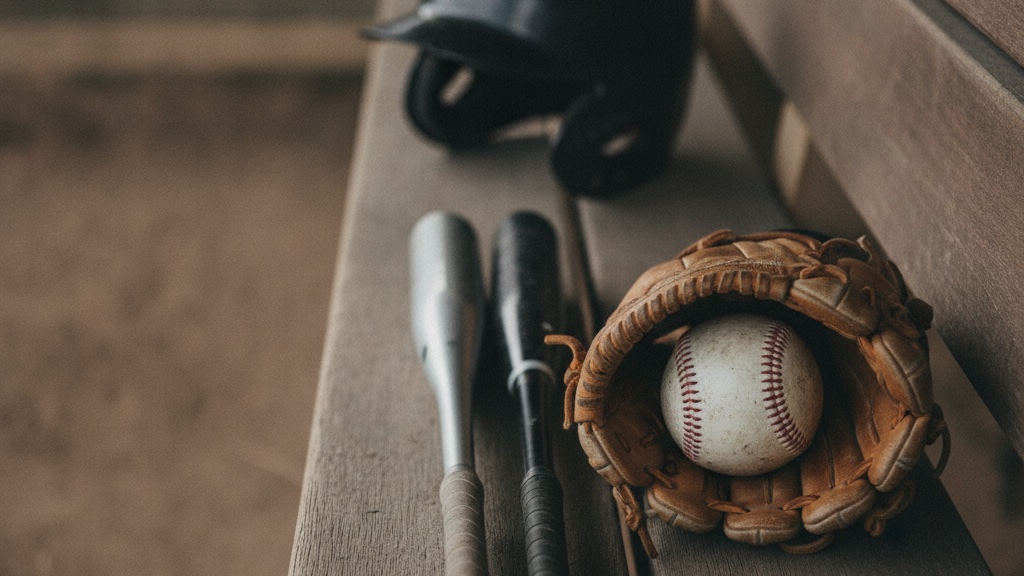
It was 48 degrees at our first outdoor practice last March, and one of my 11-year-olds had a brand-new two-piece composite he’d gotten for his birthday. Fourth round in the cage, off a dimpled machine ball, the barrel made a sound like a dropped dinner plate. Cracked. Three hundred and fifty dollars, eleven days old. His teammate in the next cage was swinging a $90 one-piece alloy that had already been through two seasons and a younger brother — and he squared up everything.
Neither bat was “better.” One was the wrong tool for that day, and nobody had told the family.
The short answer: for most players 10 and under, a one-piece alloy bat in the right size gives nearly all the performance of a composite at a fraction of the price, with no break-in and no cold-weather risk. Composite earns its cost for older, stronger travel players (roughly 11U–13U) who play a lot of games in warm weather and benefit from a bigger sweet spot and less sting. Whatever the material, the bat has to be certified for your league and sized for your player first — material is the third decision, not the first.
What Actually Separates Composite and Alloy
Alloy (aluminum) bats are machined from a single piece of metal. They’re stiff, usually a little heavier in the barrel at the same drop, and the sweet spot is smaller. When they wear out, they dent rather than crack. They’re “hot out of the wrapper” — full performance on swing one.
Composite bats are built from layered carbon fiber. The material flexes more at contact, which spreads out the sweet spot and soaks up vibration, and engineers can move weight around to make the swing feel lighter. The trade-offs: they need a break-in period, they’re sensitive to cold, and when they fail, they crack.
Hybrid bats pair a composite handle with an alloy barrel. You get most of the sting reduction of a composite with the durability and zero break-in of an alloy. For a lot of 9U–11U families, a hybrid is the quiet best answer that nobody asks about.
Here’s how they stack up for youth players:
| Alloy | Composite | Hybrid | |
|---|---|---|---|
| Typical youth price | $40–$220 | $200–$400+ | $100–$300 |
| Break-in needed | No | Yes (~150–200 swings) | No |
| Sweet spot | Smaller | Larger | Medium |
| Sting on mishits | Most | Least | Low |
| Cold weather (below ~60°F) | Fine | Crack risk | Fine |
| How it fails | Dents | Cracks | Dents |
| Typical lifespan with normal use | Multiple seasons | 1–2 seasons | Multiple seasons |
Performance: The Gap Is Smaller Than the Price Tag Suggests
Recent testing from one of the biggest independent bat-review channels backs up what we see in the cage. In their 2026 USSSA rankings, the top spot went to a two-piece composite (the Louisville Slugger Supra, around $400, and it needs a break-in) — but their budget recommendation for ages 6–10 was a one-piece alloy, the Marucci CAT, at roughly $80–$220. Their reasoning: in drop -10 youth bats, the performance gap between alloy and composite is very slim.
That matches our experience. Composite’s real advantage shows up as players get stronger and move into lighter-feeling, hotter -8 and -5 USSSA bats, where the barrel size and swing-weight engineering start to matter. For a 7- or 8-year-old, bat speed and contact quality dwarf anything the material adds.
USA Baseball bats (Little League, Cal Ripken, most rec leagues) narrow the gap further, since that standard is built to perform closer to wood. If your player is only in a USA league, paying a composite premium buys you less than it does in USSSA. Not sure which standard your league uses? Start with our USA vs USSSA bat standard guide — a great bat in the wrong certification is an illegal bat.
The Things Most Bat Guides Skip
Retail guides cover sweet spots and price. Here’s what we deal with as coaches that rarely makes the list.
Composites and cage balls don’t mix. Heavy, dimpled pitching-machine balls are hard on composite barrels, and many manufacturers warn against using them. If your player’s team cage uses machine balls, have them hit with a beater alloy in the cage and save the composite for games and live BP with real baseballs.
Spring cold is a composite killer. Most early-season practices in much of the country are below 60 degrees. Composite resin gets brittle in the cold. If you buy composite, keep a cheap alloy in the bag for cold days — that one habit would have saved my player’s birthday bat.
The team bat bag problem. In a dugout, bats get shared. A teammate swinging your kid’s composite on a cold night, or a bigger kid crushing it in BP, is how bats crack before Memorial Day. It’s fine to tell your player their composite is game-only and personal.
Sting is feedback, not just pain. A composite’s damping hides mishits. An alloy tells a young hitter, honestly and immediately, when they missed the barrel. For players still learning where the sweet spot is, that feedback is a teaching tool. It’s one reason I often suggest a full season on alloy before moving to composite — let the hitter earn the hot bat.
Be careful buying used composites. A cracked composite isn’t always obvious, and “rolled” or “shaved” composites (altered to boost performance) are illegal in every youth league. A used alloy you can inspect for dents is a much safer secondhand buy.
Which Material for Which Player
- Tee ball through 8U: Alloy, lightweight (drop -11 to -13). Don’t spend more than you need to; they’ll outgrow it next year.
- 9U–10U: Alloy or hybrid. A composite only makes sense for a committed travel player in a warm climate, and even then the gap is small in drop -10.
- 11U–12U: This is where composite starts to earn it — especially for stronger USSSA players moving to -8. Hybrids remain a great middle ground.
- 13U: Composite or hybrid for USSSA drop -8 or -5. If your player is heading into 14U, plan ahead: USSSA 14U national events now require BBCOR or wood, so read our USSSA 14U bat rule change guide before buying a drop -5 your kid might only use for one season.
The more games your player swings in, and the warmer those games are, the more a composite pays off. A rec player with 15 games and a lot of chilly April nights is an alloy kid.
How to Test Before You Buy: Our Cage Test
Don’t decide by the sound in the store. Run your player through this at a demo day, a friend’s cage, or with teammates’ bats. You’re measuring contact quality, not how good the “ping” feels to the parent.
If the player’s contact rate is the same with both bats, buy the cheaper one. If the composite wins clearly on Step 3 and the player plays a full travel schedule, it’s probably worth it. To make sure the size is right before you shop, run through our youth bat sizing guide by age and weight, then compare specific models in our 2026 youth bat tier lists. You can find youth alloy and composite bats at theranchsports.com, with 10% off and no sales tax.
The Bottom Line
Composite isn’t a cheat code, and alloy isn’t the “beginner” bat. For most kids 10 and under, a correctly sized one-piece alloy is the smart buy. Composite becomes worth the money for stronger 11U–13U travel players who swing in a lot of warm-weather games — and even then, keep an alloy in the bag for cold days and cage balls.
Whatever you buy, the swing matters more than the stick. Pair the right bat with the work in our guide to building bat speed for youth hitters, and browse more parent-tested buying advice in our youth sports gear hub.