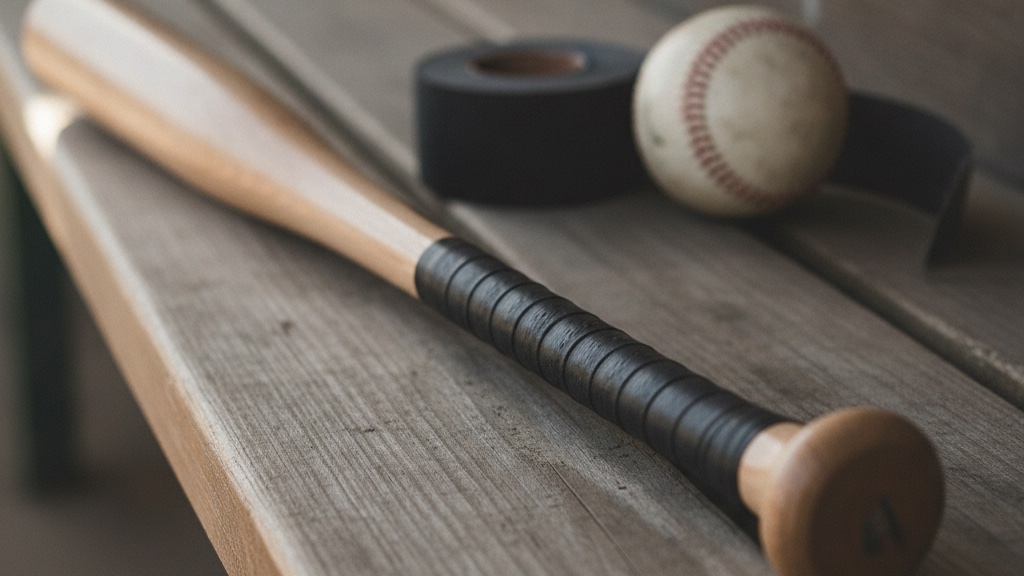
Last spring a 9-year-old on one of our teams kept fouling everything straight back and jamming himself on anything inside. His bat was the right length and the right weight. We’d checked it against our sizing chart twice. Then I watched him take his grip in the on-deck circle: the handle was buried deep in his palms, his knuckles weren’t lined up, and his fingertips barely wrapped around. His dad had just added a thick aftermarket wrap “for comfort.” We pulled the wrap off and re-gripped the bat with a thin tape, and within one cage session his hands were working again.
Here’s the short answer: most youth hitters, especially under 12, swing best with a thinner handle (roughly 7/8” on a youth wood bat, or a stock alloy/composite handle with a thin grip wrap) because it lets the bat sit in the fingers and keeps the wrists fast. A thicker handle (closer to 1”) makes sense for older, stronger hitters who want a quieter, more controlled feel, or for kids who are getting stung on mishits. What matters most is that the grip fits the hand. Handle diameter, taper, knob, and wrap thickness all change that fit.
Most bat guides spend all their time on barrel size, drop weight, and material. The handle is where your hitter actually touches the bat, and it gets almost no attention. Here’s how we think about it.
Why Handle Thickness Matters More Than Parents Think
Bat speed comes from the body, but the hands are what deliver the barrel. A handle that’s too thick for a kid’s hand pushes the bat back into the palm. Once the bat is palmed, the wrists lock up, the barrel drags, and the hitter gets long to the ball. That is exactly what was happening to our 9-year-old.
Recent testing from a popular bat-review channel compared five handle designs head to head for bat speed and exit velocity. The takeaway lines up with what we see in the cage: handle geometry (diameter, how it tapers, and how the knob flares) measurably changes swing metrics, even with the same barrel. You won’t find that conversation on most bat listings, but it’s real.
If you’re still working on the bigger picture, start with our youth bat sizing guide by age and weight. Handle fit comes after length and weight are right.
Thin vs Thick Handles: What Each One Does
| Handle | Typical youth range | Best for | Watch out for |
|---|---|---|---|
| Thin | about 7/8” (wood) | Most kids under 12, contact hitters, smaller hands | More sting on mishits, less forgiving |
| Medium | about 15/16” | Middle-school hitters still growing into a bat | Easy middle ground if you’re unsure |
| Thick | about 1” and up | Bigger, stronger hitters who want control | Palming the bat if hands are small |
Thin handles let the bat sit at the base of the fingers, which keeps the wrists loose and fast through the zone. Retailers often pitch them to contact hitters, and we agree for youth players: most kids under 12 are still learning to get the barrel to the ball, and a thin handle helps.
Thick handles feel more solid and soak up more vibration, which is why older power hitters often like them. Some wood-bat makers also market a thicker handle as offering “control” for small hands. We’ve found that only holds when the knob and taper help the hands stay put. In our experience, a thick handle on a small hand usually ends up in the palm.
A quick note on alloy and composite bats: most youth USA and USSSA bats don’t list a handle diameter at all. On those bats, the grip wrap is your adjustment. If you’re still choosing between materials, our composite vs alloy youth bat guide covers the feel differences.
Taper and Knob: The Part Nobody Talks About
Two bats with the same handle diameter can feel completely different because of the taper, meaning how quickly the handle widens into the barrel.
- Quick taper: The handle stays thin longer, then flares fast into the barrel. The bat feels more top-heavy and usually has more pop on squared-up contact. It’s less forgiving if the kid misses low on the barrel.
- Slow taper: The bat widens gradually. It feels more balanced and forgiving, which is why wood-bat makers often recommend this profile for hitters new to wood.
The knob matters too. A flared or cone-shaped knob gives the bottom hand something to rest against. That helps kids who choke up or let their bottom hand slide. A small, traditional knob suits hitters who like to keep a pinky hanging off the end.
The Grip Wrap Is Your Biggest Adjustment
This is the gap almost every handle article misses. For most youth families, the handle diameter isn’t really what you’re choosing. You’re choosing the grip.
Stock grips on youth alloy and composite bats are usually a cushioned wrap around 2mm thick. Aftermarket wraps commonly come in options from about 0.5mm (thin, lots of feel) to around 1.8mm (thick, lots of cushion). That one change can make the same bat feel like it has a thinner or thicker handle.
Our rule of thumb:
- Small hands, or a kid who palms the bat: go thinner (about 0.5–1.1mm).
- A kid who gets stung on cold days or mishits: a thicker wrap (about 1.5–1.8mm) is fine if they pass the grip test below.
- Never stack wraps. We see “added a second grip over the stock one” every season, and it nearly always turns a correctly sized handle into one that’s too fat.
You can find youth bats and grip wraps at theranchsports.com, where our athletes’ families get 10% off with no sales tax.
The 2-Minute Grip Test (Do This Before You Buy or Re-Wrap)
This is the test we run with every new hitter. All you need is the bat and a few dry swings.
If a hitter passes all four steps, the handle fits. If they fail Step 1 or Step 2, go thinner before you spend money on a new bat. A $10 wrap often fixes what parents think is a $200 problem.
Handle Fit by Age (General Guidance)
There’s no official handle-diameter chart by age, and hand size varies a lot within the same age group. Here’s how we generally steer families:
- Ages 5–8: Thin handle, thin or stock grip. Hands are small and the priority is simply getting the barrel to the ball. Avoid thick cushioned wraps that turn into a fist grip.
- Ages 9–12: Thin to medium. This is where we see palming problems most often, usually from thick wraps added after a stinging mishit. Run the grip test every season because hands grow fast.
- Ages 13–14 and up: Medium or thick is fine for bigger, stronger hitters who prefer it, especially when moving toward BBCOR or wood. Thin still works well for contact hitters.
A Mistake We See Every Fall
Hitters who start swinging wood in fall ball often grab the thickest-handled bat in the bin because it “feels solid.” Then they get jammed and blame the wood. Usually the bat’s handle and slow taper are fine. The real issue is that the hitter is gripping too far back in the palm, so the hands can’t turn the barrel over. Before blaming the bat, run the grip test and work on hand speed. Our bat speed training guide for youth hitters pairs well with this, and our youth baseball coaching hub has more hitting resources.
Bottom Line
Get length and weight right first. Then fit the handle to the hand. For most kids under 12 that means a thinner handle and a thin grip held in the fingers. Use the grip wrap as your main adjustment, never double-wrap, and re-check the fit every season as hands grow. The right handle won’t turn a 10-year-old into a power hitter, but the wrong one can quietly slow down a good swing.