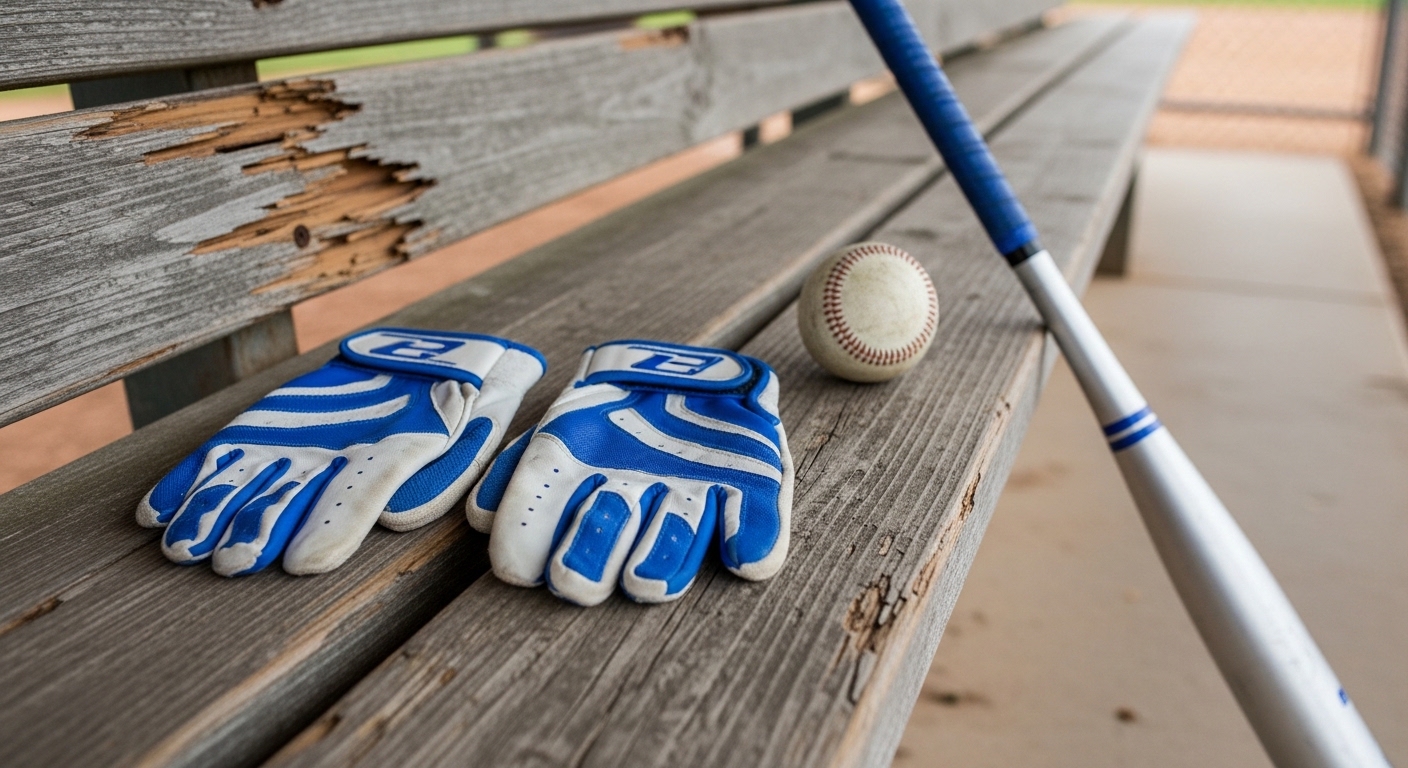
I had a 10-year-old last summer — competitive kid, solid swing, strong enough for his age — who kept flinching on inside pitches. We worked his hip load, adjusted his stance, went through his load timing. Everything checked out mechanically. The real culprit turned out to be his batting gloves: half a size too big, sliding a quarter inch through the hitting zone on every contact, transferring every bit of vibration from off-center hits directly into his palms. We swapped him into a snug pair of Franklin CFX Pros, and the flinching stopped within two sessions.
The best youth baseball batting gloves for 2026 are the Franklin CFX Pro Youth (best overall), EvoShield Pro-SRZ Youth (best sting prevention), and Marucci Code Youth (best for travel and club ball). For a budget pick under $20, the Franklin Sports Digitek Youth holds up well as a first pair. We break down all four below — plus the grip test we run in our own program that instantly tells you whether a pair will hold through a real swing, something no other review we have seen actually covers.
Why Batting Gloves Matter More Than They Look Like They Do
Most parents see batting gloves as cosmetic — something kids want because they have seen their favorite player wearing them. In practice, a good pair does three concrete things:
Grip consistency. Bare skin on a grip gets slippery with sweat by mid-July in Arizona. A thin leather palm maintains the same hand-to-bat interface every swing. For hitters still building muscle memory, consistency in the grip translates directly into consistency at the plate.
Vibration damping. A palm with any real cushioning absorbs sting from mis-hits. For 8–11-year-olds still learning plate coverage, reducing that sting matters — it keeps kids from unconsciously bailing out of the zone on pitches near the hands. Sometimes the problem you are trying to fix is not mechanical at all; it is sensory.
Grip memory. Players who wear gloves every at-bat tend to develop grip pattern memory faster. The bat sits in the same place in the fingers rep after rep. Over a 50-swing batting practice session, that compounds into more consistent swing paths.
What batting gloves do not do: fix mechanical problems. If a player is casting, looping, or dropping the back shoulder, no pair of gloves changes that. Pair them with solid fundamentals — our guide to coaching youth baseball covers where to start with all of it.
The Grip Test No Review Site Mentions
Before we get into specific picks: here is the single most important thing we do when evaluating batting gloves, and we have never seen another roundup mention it.
Have the player grip a bat handle the way they actually hold it in the batter’s box — fingers around the handle, thumb tucked. Then take the cuff of the glove between two fingers and apply firm, steady pressure upward. Not a yank — a persistent tug. If the glove moves at all, even a quarter inch, it is the wrong pair for that player.
During a real swing, the hands rotate and accelerate through the zone. Any glove with even minor looseness will micro-shift at contact, subtly changing how the barrel feels and — for developing hitters still building neuromuscular patterns — introducing inconsistency they will never be able to diagnose. We run this test at our facility on every pair before recommending it. Fit matters more than brand, price, or what looks good.
2026 Top Picks by Category
Best Overall: Franklin CFX Pro Youth
The CFX Pro has been our go-to for several seasons, and the 2026 version fixes the wrist strap durability problem that plagued earlier runs (the strap would lose grip after three or four weeks of daily use — a frustrating flaw in an otherwise excellent glove). The full-grain leather palm is thin enough for young hands to feel the barrel without losing the grip advantage. The four-way stretch mesh back handles summer heat well, and the fit is true to size across the full S–L youth range.
Run the grip test above in the medium or large — most 10U–12U players land in medium. Best for 9U–14U players practicing three or more days per week who need a glove that lasts a full season.
Best Sting Prevention: EvoShield Pro-SRZ Youth
The ShieldFlex foam palm on the EvoShield absorbs more vibration than anything else we have tested in this price range. Some older hitters find the extra thickness slightly reduces their feel for the barrel — but for younger players still building plate confidence, that cushioning is exactly what they need. I have handed these to parents of kids who were visibly scared of pitches near the hands, and within a week those same kids were crowding the plate again.
Best for 7U–10U hitters learning plate coverage or any player who has taken a pitch on the hands and developed a flinch.
Best for Travel and Club Ball: Marucci Code Youth
Marucci bat quality is well-documented, and the Code gloves are built to the same standard — real materials, no shortcuts. The cabretta leather palm is soft immediately out of the box, which matters if a player is going straight into a tournament without time to break anything in. The Velcro closure holds firm through 50-plus at-bats, which is exactly where budget gloves start to fail. The sizing runs slightly narrow, which suits most youth hand shapes.
Best for 10U–14U travel and club players who want a premium glove that performs in both early-spring cold and summer heat.
Best Budget Pick: Franklin Sports Digitek Youth
Under $20, the Digitek is what we recommend to parents who are not sure their player will commit to wearing gloves consistently through the season. The synthetic palm does not match real leather in grip feel, but it is breathable, machine washable, and more durable than the price tag suggests. A reasonable first pair before investing in premium.
Best for 6U–9U beginners, or as a backup pair to keep in the bag.
How to Size Youth Batting Gloves
Youth batting gloves typically come in XS/S/M/L. General age ranges as a starting point:
- 6U–8U: Extra small or small
- 9U–11U: Small or medium depending on hand size
- 12U–14U: Medium or large youth (some fit adult small)
For a more accurate fit, measure the hand. Have the player hold their hand flat, fingers together, palm up. Measure in inches from the tip of the middle finger to the base of the palm: under 5.5” = small; 5.5”–6.5” = medium; 6.5”–7.5” = large. Then run the grip test — the measurement gets you to the right neighborhood, but only a real grip tells you if it is actually right.
For a complete breakdown of glove sizing by age and position — including fielding gloves, catcher’s mitts, and first base mitts — see our youth baseball glove sizing guide.
When to Replace Batting Gloves
Most families keep gloves too long. Replace a pair when:
- The palm leather is cracking or peeling (cracked leather grips inconsistently and the rough surface can abrade the palm)
- The Velcro closure no longer holds a firm seal through a full swing
- A pair that used to pass the grip test now shows movement
- The seams at the base of the fingers are pulling apart
A quality pair used in practices and games lasts one full season for most 10U–12U players practicing two to three days per week. Higher-volume players — daily batting practice, camps, heavy travel schedules — may need to replace mid-season. We stock up at theranchsports.com, which carries all four brands above and offers Arizona families 10% off plus no sales tax. For ongoing glove care — how to store them, what kills the palm leather fastest, and how to slow breakdown — our how to break in a baseball glove guide has a care section that applies directly to batting gloves as well.
Pairing Gloves with Your Bat Setup
One thing coaches rarely flag: batting gloves and bat grip tape interact. A thick cushioned wrap changes the effective diameter of the handle. If your player re-grips their bat at any point in the season, have them redo the grip test — a glove that passed before may shift on a freshly wrapped handle. For bat recommendations to pair with, our best youth baseball bats for 2026 guide covers the top picks by age group and league.
Quick Summary
| Pick | Best For |
|---|---|
| Franklin CFX Pro Youth | Best overall; 9U–14U players who practice regularly |
| EvoShield Pro-SRZ Youth | Sting prevention; 7U–10U confidence building |
| Marucci Code Youth | Travel and club ball; premium durability |
| Franklin Sports Digitek Youth | Budget first pair; 6U–9U beginners |
Run the grip test before committing to any pair. A glove that shifts — no matter how well-reviewed or how good the price — is not the right glove for your player. Questions about what we are using for a specific age group or position in our program? Reach out anytime.